Deck Chairs on the Titanic
Written on February 9th, 2026 by Grey Blog
Deck Chairs on the Titanic
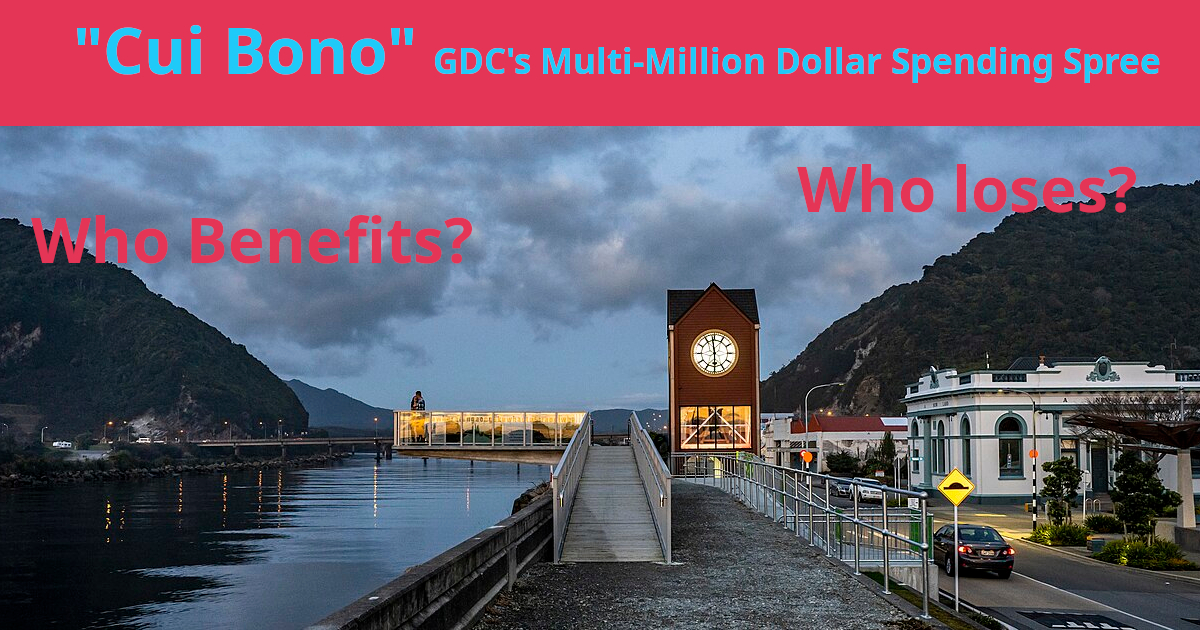
In recent weeks, a number of local citizens have suggested that the new Grey District Library is a fait accompli and therefore we should no longer criticise the process by which we arrived at this point, or the outrageous cost burden placed on ratepayers. This kind of reasoning is extremely dangerous and should be resisted by ratepayers concerned about how their rates and taxes are spent.
Even after money has been spent, pursuing local government misspending is essential for accountability, and long-term public trust. While the funds may no longer be in the Grey District Council’s coffers, the consequences of misuse persist. Accountability cannot be waived simply because a transaction is complete; ratepayers have a right to know how their rates were used.
First, let us address the myths surrounding sunk costs. Local governments, like any decision-makers, are tempted to let past expenditures dictate future policy, a classic sunk-cost fallacy. Basing public choices on money already spent is fundamentally irrational and can lead to bad fiscal decisions. Yes, Sunk costs are irrecoverable. Indeed, once a sum has been disbursed on a project, it cannot be reclaimed regardless of outcome. However, when councillors cling to costly schemes simply because “we have already spent $20 million,” they risk allocating scarce resources to the wrong activities rather than redirecting funds toward more vital infrastructure, such as affordable housing, underground pipes, or footpaths.
Ratepayers expect councillors to act in the collective interest, not to protect political legacies or to build a library as a monument to personal pride. When a council continues a costly project, the perception is that officials are “throwing good money after bad.” This fuels cynicism and can depress ratepayer engagement, undermining the foundations of effective governance. Continuing to spend because of sunk costs hampers adaptability. Councils that regularly reassess programmes—scaling back obsolete contracts or abandoning costly partnerships—are better positioned to respond to new challenges. As ratepayers we should all hope that our Councillors are constantly vigilant as to not “throwing good money after bad.”
We require our Mayor and Councillors to show fiscal prudence and cost awareness. Every dollar tied up in the new library is a dollar unavailable for other vital projects. You can still believe that having a library is a good idea without agreeing that spending $20 million or more on a new library is a good idea. The costs for the new library are now in excess of $24 million, that is an awful lot of missed opportunities to do something else.
Every ratepayer should be concerned about how their rates are spent, particularly when we have seen so much more money spent than originally identified and so many other financial irregularities and missing dollars in the GDC’s books overall.
Transparency strengthens democracy. Investigating past mismanagement through inquiries and media scrutiny reveals systemic flaws. It empowers ratepayers to demand reform and improves future oversight.
Pursuing misspending after the fact is not about dwelling on the past—it’s about protecting the public interest.

```js client
If you wish to post anonymously there is no need to fill in the email field.
If you have trouble posting a comment please use a chrome browser. Comments may not work with Firefox or other browsers, we are working to rectify this.